Trying Sapodilla: A Surprisingly Sweet Tropical Fruit
Published: 20-Jan-2026 (16:48); Viewed: 880; Difficulty: 1 out of 10Rating: N/A
k
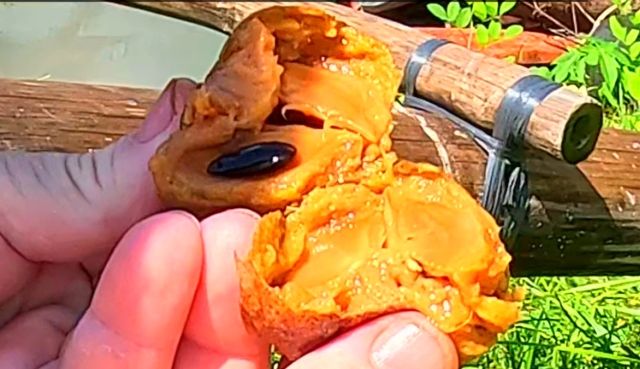 |
The key to enjoying sapodilla is ripeness. A ripe fruit should feel soft when gently pressed. If it is hard, it is not ready yet and will taste unpleasantly astringent. Once ripe, the skin peels easily, and the flesh can be eaten with a spoon or by hand. Inside, you'll find a few large black seeds - these are not edible and should be removed.
From a nutrition point of view, sapodilla is naturally high in carbohydrates and sugars, with values often reaching around 20 g of sugar per 100 g of fruit. This makes it very energy-dense compared to many other fruits. It also contains small amounts of fiber and minerals, but it is best thought of as a sweet fruit rather than a "light" one. Because of its strong flavor, a small amount is usually enough.
Sapodilla is most often eaten fresh, but it can also be used in smoothies, desserts, ice cream, or even fermentation experiments thanks to its high sugar content. In the Philippines, it is widely available and very affordable, making it an easy fruit to try without much risk.
In the video linked with this post, I show how to recognize a ripe sapodilla, how to peel and eat it, and describe its taste and texture in real time. If you've never tried sapodilla before, watching it being opened and tasted makes it much easier to know what to expect.
If you see sapodilla at a local market, it's worth picking one up '- it's a simple fruit, but a very distinctive one.
step-by-step instructions
|
|
tips and tricks
- Do not eat not ripen fruits
| Follow @HowToGD | 
|

|

|
||||
| navigation: | officials: | topics: |