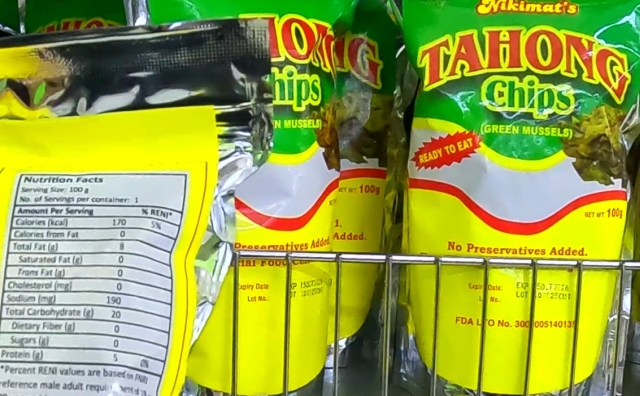
Why 170 kcal per 100 g of Crisps Is Almost Certainly Wrong
Published: 30-Dec-2025 (15:56); Viewed: 1199; Difficulty: 1 out of 10Rating: N/A
k
 |
To understand why, it helps to look at standard crisps and snack foods worldwide. Traditional potato chips, corn chips, shrimp crackers, lobster crackers, and similar fried snacks almost always fall into a narrow range: 450–550 kcal per 100 g. This is true whether the product is sold in Europe, the UK, Southeast Asia, or the US. The reason is simple — crisps are dry, fried, and contain a significant amount of fat, which alone contributes 9 kcal per gram.
Even snacks marketed as "lighter" or "vegetable-based" rarely drop below 400 kcal per 100 g. When labels show smaller numbers, it is usually because calories are listed per serving, not per 100 g. A common trick is using a 25–30 g serving size, which makes the calorie number look modest while the actual density remains high.
Comparing With Real, Standard Crisps
In the same supermarket aisle, other snacks followed this expected pattern perfectly. Most crisps listed around 150 kcal per 30 g, which converts to roughly 500 kcal per 100 g. Lobster crackers, chicken-based crisps, vegetable crisps, and even water spinach snacks all landed in this same energy range once converted properly.This consistency matters. Food production methods differ, but physics and chemistry do not change. Fried, dehydrated snacks cannot magically lose hundreds of kilocalories without also losing fat, starch, or dryness — none of which applies to crisps.
Now compare that with the green mussel crisps claiming 170 kcal per 100 g. That value is closer to boiled rice, cooked mussels, or lean cooked fish — not a fried, crunchy snack. For such a number to be real, the product would need to contain very little fat and a large amount of water, which contradicts both the texture and shelf stability of crisps.
What Most Likely Happened
The most probable explanations are straightforward:- Unit confusion: the value may actually be per serving, not per 100 g
- Printing or translation error on the packaging
- Incorrect conversion during label design
- Regulatory inconsistency, where nutrition tables are not strictly audited
What is very unlikely is that these crisps genuinely contain only 170 kcal per 100 g while being dry, crispy, and shelf-stable.
Why This Matters for Consumers
Nutrition labels are not just decorative. People with diabetes, those managing weight, or anyone tracking calories rely on accurate information. When a label shows a value that is unrealistically low, it creates a false sense of healthiness and undermines trust in food labeling as a whole.This case is a good reminder to always check whether calories are listed per serving or per 100 g, and to compare products logically rather than trusting a single number in isolation.
In short: based on well-established nutritional ranges, 170 kcal per 100 g for crisps is almost certainly a mislabeling error, not a revolutionary low-calorie snack.
step-by-step instructions
|
|
| Follow @HowToGD | 
|

|

|
||||
| navigation: | officials: | topics: |