Understanding the New Wave of Nutrition Labels on UK Beer Bottles
Published: 24-Nov-2025 (12:58); Viewed: 1441; Difficulty: 1 out of 10Rating: N/A
k
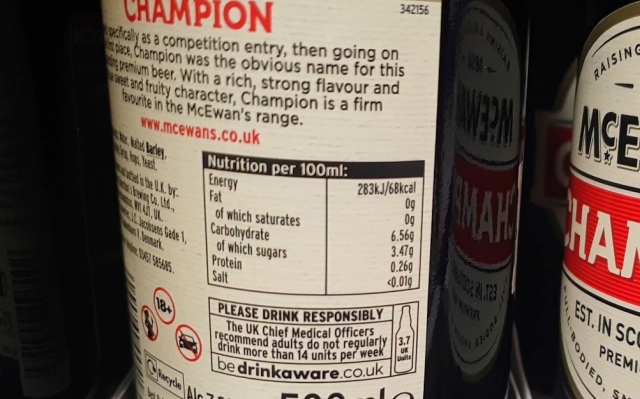 |
In the video attached to this post, I walk through the beer aisle in Tesco and look closely at how breweries are beginning to include calories, carbohydrate levels and sugar content on the packaging. This level of nutritional detail was almost unheard of a few years ago, but it is now showing up on real ales, modern craft releases and even some traditional brands. The pattern suggests one thing: legislation or industry guidance is moving, and mandatory nutrition labels for alcoholic beverages may soon become standard in the UK.
Are Breweries Adding Nutrition Tables?
Many beer drinkers care about what they consume, especially when it comes to calories and carbohydrates. For people monitoring their diet, managing diabetes, or simply trying to understand how beer fits into their daily intake, these labels are extremely helpful.Some bottles now clearly show the number of kilocalories per bottle or per 100 ml. Others go further, listing total carbohydrates and, within that, how much is sugar. This allows consumers to compare beers directly on the shelf - something that was impossible with older labels.
Alongside this, breweries may face upcoming regulations that require more transparency in alcoholic drinks. Even though not all brands have adopted these tables yet, enough have done so to indicate that change is coming sooner rather than later.
How to Read the Nutrition Information
Different beers display nutritional values in different ways. Some show only calories. Others include a complete breakdown with carbohydrates and sugars. What these numbers represent can tell you something about the beer itself:- Higher carbohydrate values usually mean a fuller-bodied beer with more residual malt character.
- Higher sugar values often point toward a sweeter beer or a recipe that leaves some fermentable sugars behind.
- Low carb beers are typically drier, lighter and more fermentable.
Understanding these small differences helps you make choices based on both health and flavour preferences.
The Lactose Question: Sugar or Carbohydrate?
The video also touches on an important detail: lactose. This ingredient is common in milk stouts, dessert beers and pastry-style ales. Chemically, lactose is a sugar - but brewer's yeast cannot ferment it. Because it remains in the beer unchanged, it is usually listed under carbohydrates, not under "of which sugars".This can confuse consumers who expect sweetness to correlate directly with the sugar number. In reality, some of the sweetness may be coming from lactose that is technically listed as a carbohydrate. Different breweries may display it slightly differently, but the general rule is that lactose contributes to total carbs far more than to total sugars.
A Positive Step for Consumer Awareness
Adding nutrition tables to beer labels is a step toward greater transparency. Many people checking their health or diet will find these details valuable, and it helps consumers make more informed choices - whether they are monitoring calorie intake, reducing sugar consumption or simply curious about what's inside their favourite ale.If the trend continues, we may soon see full nutrition declarations become a standard requirement for all beers sold in the UK. For now, watching the early adopters gives a clear preview of where the market is heading.
step-by-step instructions
|
|
| Follow @HowToGD | 
|

|

|
||||
| navigation: | officials: | topics: |